Lager vs Strong Beer — What Is the Difference and Which Should You Try?
India has two dominant beer categories, standard lager and strong beer. Here is what separates them, how each one tastes, and how to choose the right one for you.
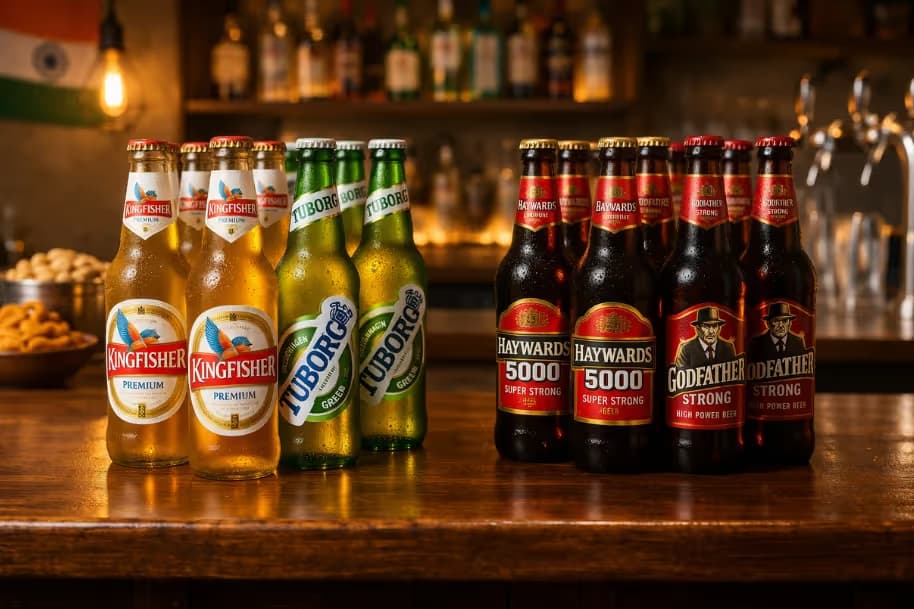
Walk into any bar or liquor shop in India and you will immediately notice that the beer section divides quite naturally into two camps. One side has the familiar pale golden bottles with names like Kingfisher Premium, Tuborg Green, and Budweiser. The other side has thicker, darker-labelled bottles, Kingfisher Strong, Tuborg Strong, Haywards 5000, Godfather, that carry an implicit message about what is inside.
These two categories, standard lager and strong lager, define Indian beer drinking more than any other distinction. Most drinkers pick a side and stick with it. But few actually understand why these two categories taste and feel so different, or how to make an informed choice between them.
This guide explains exactly that.
What Is a Standard Lager?
A lager is a style of beer brewed at cool temperatures using bottom-fermenting yeast. The word "lager" comes from the German word lagern, meaning "to store", because these beers were traditionally stored in cold caves during fermentation.
The result is a beer that is:
- Light-bodied — not thick or heavy
- Clean and crisp — no strong or complex flavours
- Mildly bitter — from the hops
- Pale golden in colour
- Highly carbonated — refreshingly bubbly
- Moderate in alcohol — typically 4.5% to 5.5% ABV
Standard lagers are designed to be refreshing. They are hot-weather beers, food-companion beers, social beers. They do not dominate the palate, they complement whatever situation you are in.
Examples available in India:
- Kingfisher Premium Lager — ABV ~4.8%
- Tuborg Green — ABV ~4.8%
- Budweiser — ABV ~5%
- Heineken Lager — ABV ~5%
- Bira 91 Blonde — ABV ~4.9%
What Is a Strong Beer?
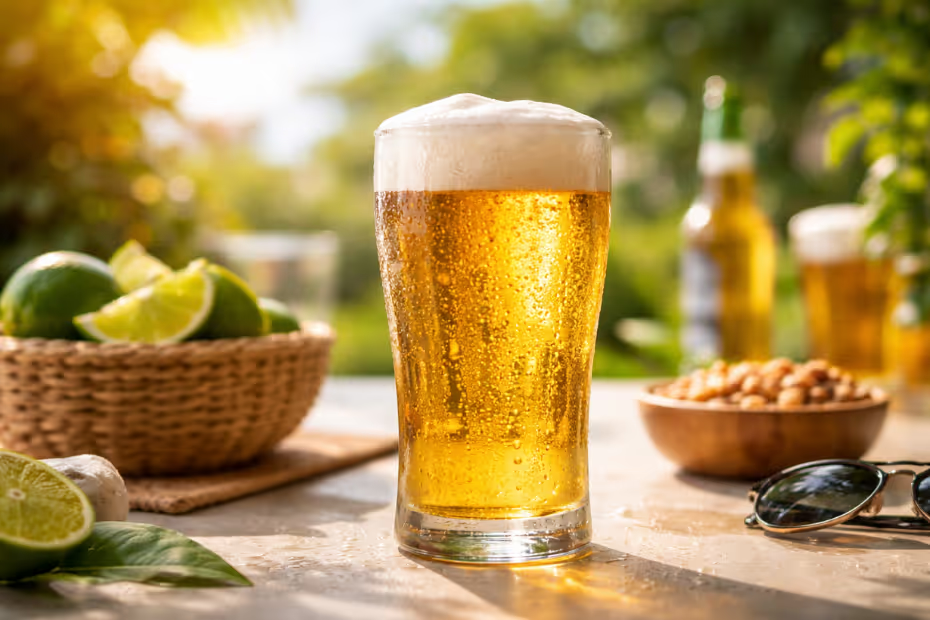
A strong beer, specifically a strong lager, follows the same basic brewing process as a standard lager but with significantly more fermentable ingredients (primarily malt). This produces:
- Higher alcohol content — typically 6.5% to 8%+ ABV
- Fuller, heavier body — more malt means more substance
- More sweetness — higher malt concentration means more residual sugar
- Stronger flavour — less crisp, more intense
- More warming — the alcohol creates a noticeable heat sensation
Strong beer is not just a stronger version of regular beer. It actually tastes different. Where a standard lager is designed to refresh, a strong lager is designed to satisfy. The flavour is richer and more malt-dominant. The experience lasts longer. And the alcohol accumulates faster.
Examples available in India:
- Kingfisher Strong — ABV ~8%
- Tuborg Strong — ABV ~7.2%
- Budweiser Magnum — ABV ~6.5%
- Bira 91 Boom — ABV ~6.6%
- Haywards 5000 — ABV ~7%
- Godfather Super Strong — ABV ~7.5–8%
The ABV Gap — Why It Matters More Than You Think
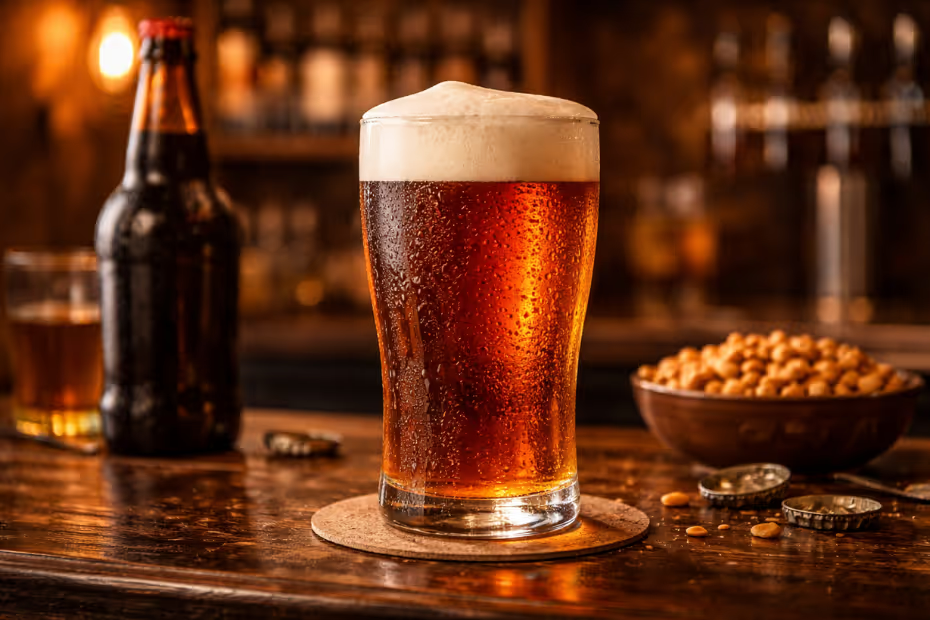
Here is the number that most casual drinkers underestimate: the difference between a 5% standard lager and a 7.5% strong beer is not small. It is 50% more alcohol per sip.
Put another way: one 650ml bottle of Godfather Super Strong (7.5% ABV) contains roughly the same amount of alcohol as two full bottles of Kingfisher Premium Lager.
This is why many people feel surprisingly affected after one or two strong beers when they expected a standard experience. The format looks similar — a bottle, a glass, the same familiar pour — but the content is dramatically different.
Why Is Strong Beer So Popular in India?
India's strong beer segment is, by most estimates, one of the largest in the world by volume. More than half of all beer sold in India is strong beer. This is unusual, in most Western markets, standard lagers dominate and strong beers are a niche.
Several factors explain this:
Value for money, Strong beers deliver more alcohol at a comparable or lower price point. For price-sensitive consumers, this matters.
Climate and occasion, Beer in India is often consumed specifically for its relaxation effect after long workdays in hot weather. A stronger beer delivers that effect more quickly.
Cultural normalisation, In many parts of northern and eastern India, strong beer has been the default category for decades. Brands like Haywards 5000 (launched 1983) and Godfather Super Strong have shaped drinking habits across multiple generations.
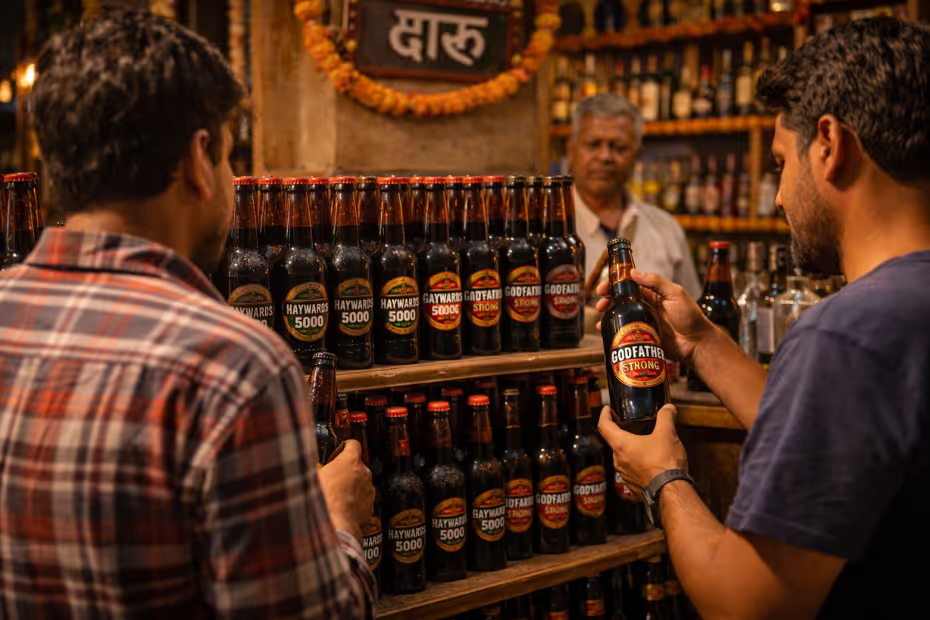
The "one beer after work" pattern, Strong beer allows for a satisfying experience with fewer bottles, which suits the solo after-work drinking occasion common in smaller cities and towns.
Tasting the Difference: A Side-by-Side Comparison
| FeatureStandard LagerStrong Lager | ||
| ABV | 4.5% – 5.5% | 6.5% – 8%+ |
| Body | Light and easy | Fuller and heavier |
| Sweetness | Low | Medium to high |
| Bitterness | Mild | Low to mild |
| Colour | Pale golden | Deep golden to amber |
| Aroma | Light grain, subtle hops | Heavy malt, slight sweetness, alcohol warmth |
| Finish | Short and clean | Long and warming |
| Best Served With | Light food, casual occasions | Heavy meals, relaxing or post-work |
| Alcohol Sensation | Subtle, builds slowly | Strong, builds quickly |
Which Should You Try First?
If you are new to beer: Start with a standard lager. Kingfisher Premium or Tuborg Green are the most obvious first choices. Learn what beer tastes like at a manageable alcohol level before stepping up.
If you drink standard lagers regularly and want something more: Bira 91 Boom is a good bridge - it is stronger than a standard lager but more refined and flavourful than the raw strong lagers. Budweiser Magnum is another smooth step up that does not feel too heavy.
If you are exploring India's strong beer heritage: Haywards 5000 is the historical reference point. It has been defining the category since 1983 and tells you a lot about what Indian strong beer is and where it came from.
Godfather Super Strong represents the strongest end of the commercial category.
If you want more flavour rather than just more alcohol: Consider skipping the strong category entirely and exploring wheat beers or craft lagers instead. Bira 91 White or Simba Lager deliver genuine flavour interest without the elevated ABV.
The Craft Beer Middle Ground
Worth noting: the rise of India's craft beer scene has created a third category that sits interestingly between standard and strong. Craft lagers like Simba Lager and White Rhino Craft Lager typically sit at 5% ABV - the standard lager range - but deliver noticeably more flavour complexity than mass-market options.
For drinkers who feel that mainstream lagers are too bland and strong beers are too intense, this craft middle ground is worth exploring.
→ Read: Indian Craft Beer Is Having a Moment, Here Is Where to Start
How to Drink Strong Beer Safely

This section matters. Strong beer is genuinely more powerful than most casual drinkers account for.
Practical rules for strong beer drinking:
Eat a full meal first. Food slows alcohol absorption. Strong beer on an empty stomach is a fast way to misjudge your limits.
Drink water alongside. A glass of water per beer is a useful general rule. It helps hydration and naturally slows your pace.
Set a volume limit before you start. One 650ml strong beer is already a significant amount of alcohol. Two is a lot. Know this in advance.
Drink slowly. A strong beer savoured over 45 minutes affects you very differently than the same beer consumed in 15 minutes.
Never mix strong beer with other spirits without being fully aware of what you are adding to your body.
Never drive. This is not optional. Strong beer at 7–8% ABV affects driving ability well within the second glass. Plan your transport before you drink.
The OccasionalDrinker Perspective
At OccasionalDrinker.com, we do not judge either category. Standard lagers and strong lagers both have their place. The key is knowing what you are drinking and why.
The problem we often see is this: people drink strong beer as casually as they would drink a standard lager, same pace, same quantity, without adjusting for the dramatic difference in alcohol content. This is how occasions that started well end badly.
Mindful drinking means knowing your drink. A Kingfisher Premium and a Kingfisher Strong are very different things wearing similar packaging. Understanding that difference is the first step to drinking well.
Quick Reference Summary
| You WantTry This | |
| Light, refreshing, easy to drink | Kingfisher Premium, Tuborg Green, Budweiser |
| Smooth premium lager | Heineken Lager, Kingfisher Ultra |
| More flavour without high ABV | Bira 91 Blonde, Simba Lager |
| Step into stronger beer gradually | Bira 91 Boom, Budweiser Magnum |
| India’s classic strong lager | Haywards 5000, Tuborg Strong |
| Maximum strength and intensity | Godfather Super Strong, Kingfisher Strong |
OccasionalDrinker.com is a platform for adults of legal drinking age only. We promote mindful, responsible consumption. Always drink in moderation and never drink and drive.
OccasionalDrinker promotes mindful and responsible alcohol consumption. Content intended for adults 21+.