Why Do People Swirl Their Wine Glass?
People swirl wine to release aromas, not to show off. Learn the simple science, history, and when swirling actually makes a difference.
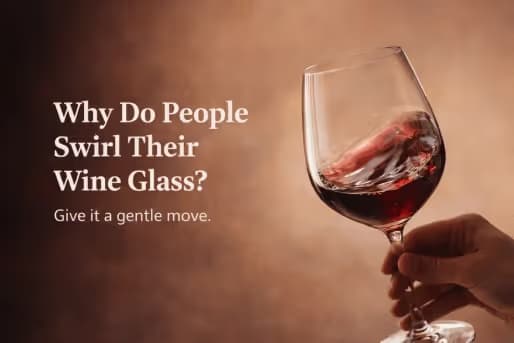
You’ve seen it. Someone pours wine, pauses, gives the glass a gentle swirl, inhales deeply… and suddenly looks like they know things.
Relax. Swirling isn’t a flex. It’s functional.
At its core, swirling wine is about aroma, not drama.
Wine is experienced in three steps:
- Look
- Smell
- Taste
Swirling mainly helps with step two. And smell, awkwardly enough, does most of the heavy lifting when it comes to flavour.
The Simple Science Behind Swirling (No Lab Coat Needed)
Wine contains volatile aroma compounds. These are fancy words for smells that want to escape the liquid.
When wine sits still:
- Aromas stay trapped
- Alcohol dominates the nose
- The wine feels “flat”
When you swirl:
- The surface area of the wine increases
- Oxygen mixes in
- Aromas evaporate and rise into the glass
Your nose catches them before your tongue ever does.
That’s why, after swirling, people say things like:
- “This smells fruity”
- “I get spice”
- “There’s something floral going on”
They’re not hallucinating. They’re just smelling properly.
Why Smell Matters More Than Taste (Uncomfortable Truth)
Here’s the part wine lovers don’t always explain clearly:
Most of what you call “taste” is actually smell.
Your tongue can detect:
- Sweet
- Sour
- Bitter
- Salty
- Umami
That’s it. No mango. No cherry. No vanilla.
Those flavours come from aroma molecules travelling from your mouth to your nose. Swirling helps release them before you drink, so your brain already has context.
Without swirling:
- Wine tastes muted
- Alcohol feels harsher
- Everything blends into “yeah it’s wine”
With swirling:
- Flavours feel clearer
- Wine feels smoother
- You suddenly “get it”
A Little Wine History (Because Humans Love Rituals)
Swirling isn’t a modern influencer habit.
Historically:
- Old wines were cloudy
- Sediment settled at the bottom
- Gentle swirling helped assess clarity and age
In European wine culture, swirling became part of evaluation rituals, not consumption. Farmers, merchants, and later sommeliers used it to judge:
- Wine health
- Freshness
- Faults like cork taint
Over time, the habit stuck. Humans love rituals that make them feel intentional.
Today, even casual drinkers swirl because:
- It slows the moment
- It creates anticipation
- It makes drinking feel mindful, not rushed
Basically, swirling is wine saying: “Pause for a second.”
Does Every Wine Need Swirling?
Short answer: No.
Long answer: depends on the wine and the moment.
Wines that benefit most from swirling:
- Red wines (Cabernet Sauvignon, Syrah, Pinot Noir)
- Aromatic whites (Sauvignon Blanc, Riesling)
- Young wines that feel tight or closed
Wines that need less swirling:
- Sparkling wines (you’ll kill the bubbles)
- Very old wines (too much oxygen can damage them)
- Super chilled wines (aromas won’t open anyway)
At a house party? Light swirl is fine. At brunch? Nobody’s grading you. At a wine tasting? Yeah, swirl away.
Why Swirling Looks Pretentious (But Isn’t)
Let’s be honest. Swirling has a PR problem.
It looks pretentious because:
- People exaggerate it
- Some use it as a performance
- Wine culture historically gatekept beginners
But the action itself is neutral. It’s like smelling food before eating. Or stretching before a run.
The problem isn’t swirling. The problem is people pretending it’s mysterious.
Truth bomb: You can swirl wine and still say, “Smells nice, tastes good.” That’s valid.
The Right Way to Swirl (Low-Effort Edition)
You don’t need sommelier wrist training.
Two easy methods:
1. Table Swirl (Beginner-safe)
- Keep the base of the glass on the table
- Move it in small circles
- Zero spill risk
2. Air Swirl (If you’re confident)
- Hold the stem, not the bowl
- Small circular motion
- No aggressive wrist gymnastics
अगर गिर गया, blame the table. Everyone does.
Stories Wine Smells Tell
This is where wine gets interesting.
When people say:
- “This smells like cherry”
- “I get leather”
- “There’s spice here”
They’re not saying ingredients were added.
They’re connecting aromas to memory.
Wine smells like:
- Places you’ve been
- Food you’ve eaten
- Seasons you remember
That’s why two people can smell the same wine and say different things. Both are right.
Wine isn’t objective. It’s emotional chemistry.
Swirling Slows You Down (And That Matters)
One underrated reason swirling exists: pace control.
Swirling:
- Slows drinking
- Encourages smaller sips
- Makes you engage before consuming
For occasional drinkers, this is huge.
You drink:
- Less
- Better
- More consciously
That’s not snobbery. That’s responsible enjoyment.
Do You Have to Swirl to “Drink Wine Correctly”?
Absolutely not.
You can:
- Skip swirling
- Drink straight
- Enjoy wine however you like
Wine doesn’t come with homework.
But if you’re curious, swirling is a tool. Use it when you want more from the glass. Ignore it when you don’t.
Both choices are valid.
Quick Takeaways (For Real Life)
- Swirling wine helps you smell it better
- Smell shapes flavour more than taste
- It’s about awareness, not showing off
- Not every wine needs it
- You’re allowed to keep it simple
Bottoms Up
Wine swirling isn’t about pretending to be cultured. It’s about paying attention.
And in a world where we rush everything, a small pause before a sip isn’t the worst habit to pick up.
Drink slowly. Drink thoughtfully. Or don’t drink at all. That’s fine too.
Occasional Drinker energy only.
OccasionalDrinker promotes mindful and responsible alcohol consumption. Content intended for adults 21+.