EU FTA 2026: Alcohol Imports from France, Italy, Spain to Get Cheaper in India
EU–India FTA 2026 could reshape alcohol pricing by easing import duties on wine and spirits from France, Italy, Spain, and Ireland.
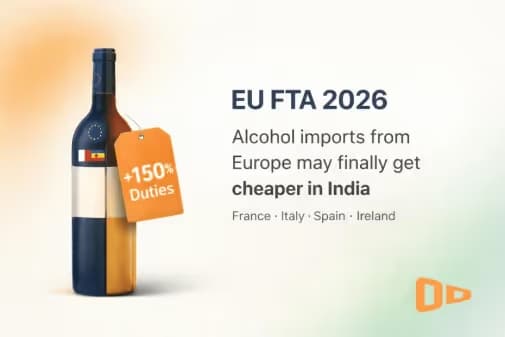
If you’ve ever stared at a €10 European wine on a shelf in India priced like it paid rent in South Mumbai, you’re not imagining things. This is exactly why wine and spirits are one of the most sensitive chapters in the proposed EU–India Free Trade Agreement (FTA), expected to move decisively in 2026.
Right now, imported alcohol in India isn’t expensive because it’s fancy. It’s expensive because it’s taxed into submission.
Current reality: How pricing actually works
Before an imported bottle even reaches a store shelf, it goes through a taxation obstacle course.
1. Import duties (the big hit)
- Wine: ~150% basic customs duty
- Spirits (whisky, vodka, rum, gin): up to 150%
This duty is applied before anything else, meaning the base price already balloons.
2. Then the state steps in (again)
On top of central duties, states add their own layers:
- State excise duty
- VAT/state taxes
- Label registration fees (often per SKU, per state)
- Compliance costs that change from state to state
Alcohol is a cash cow for states, so nobody’s feeling generous.
3. The invisible multipliers
After taxes come the operational realities:
- Import logistics and cold-chain (especially for wine)
- Distributor margins
- Retail margins
By now, the bottle has emotionally given up.
What this means in real prices
Let’s translate this into numbers that actually hurt:
- A €10 bottle of wine
→ ₹2,500–3,000 in India
- A €25 Scotch whisky
→ ₹6,000–8,000 on the shelf
This is not premium positioning. This is a premium by punishment.
Why this matters in the EU FTA 2026 talks
The European Union has made it clear: alcohol duties are non-negotiable talking points in the FTA.
Their argument:
- Lower duties = higher volumes
- Higher volumes = stable tax revenue
- Predictable pricing = market growth
India’s concern:
- Alcohol taxes fund state budgets
- Domestic wine and spirits need protection
- Sudden duty cuts could disrupt local players
So the discussion isn’t about making wine “cheap”. It’s about making pricing less absurd and more rational over time.
Country-wise impact: Why France, Italy, Spain matter most
France
France is India’s most visible EU alcohol partner.
What’s affected:
- Champagne
- Cognac
- Bordeaux & Burgundy wines
Why it matters:
- French products dominate the premium imported wine and Cognac segment in India
- Any duty reduction directly impacts bottles priced above ₹6,000
- France is a key pressure point in negotiations
Italy
Italy drives volume, not luxury.
What’s affected:
- Prosecco
- Pinot Grigio
- Chianti
- Aperitivo-style spirits
Why it matters:
- Italian wines are popular with first-time and casual wine drinkers
- High duties currently block mass adoption
- FTA relief could push Italian wines beyond niche metro consumption
Spain
Spain is the value-quality EU wine player.
What’s affected:
- Rioja
- Cava (sparkling wine)
Why it matters:
- Spanish wines are competitively priced in Europe but overpriced in India
- Duty correction could make Spain a serious alternative to Indian and Australian wines
- Strong upside if entry-level pricing improves
Ireland
Ireland matters for one fast-growing category.
What’s affected:
- Irish whiskey
Why it matters:
- India is among the fastest-growing markets for Irish whiskey
- Current pricing keeps it premium-only
- Duty easing could unlock volume growth without undercutting domestic whisky
Why has nothing changed yet
Because alcohol sits at the intersection of:
- Central trade policy
- State revenue control
- Domestic industry lobbying
- Political optics
Basically, everyone wants reform. Nobody wants to blink first.
Bottoms UP
As EU FTA 2026 negotiations continue, wine and spirits remain a pressure point because they expose a simple truth:
India doesn’t price imported alcohol as a product. It prices it as a sin, a luxury plus a revenue hack.
Until duties are reworked through a structured trade agreement, imported European wine and spirits will stay expensive, not because they’re elite, but because the system insists they suffer first.
OccasionalDrinker promotes mindful and responsible alcohol consumption. Content intended for adults 21+.